Top 10 Must-Visit Places in Sichuan, China for Foreign Travelers
If you are a foreign traveler planning a first trip to Sichuan and wondering which places deserve a spot on a 5-to-10-day itinerary, the short answer is this: pick one of three zones rather than trying to cover the whole province. Sichuan combines the Chengdu-adjacent cultural belt (Dujiangyan, Mt. Qingcheng, Mt. Emei, Leshan, Sanxingdui), the Ganzi prefecture nature circuit (Da Gongga, Mt. Siguniang, Daocheng Yading, Aba Grassland, northwestern Ganzi), and the southern lake country (Xichang and Lugu Lake). The list below is a curated ranking from a Sichuan-born local, not an official top ten, and it groups these zones so a first-time visitor can plan a focused trip.

Why these ten, and why grouped into three zones
A generic “top 10” list tends to scatter places hundreds of kilometers apart and assume you can day-trip to all of them. In Sichuan, that almost never works. Daocheng Yading alone is a two-day one-way self-drive from Chengdu, and the Da Gongga loop is a full-week commitment in a capable SUV. Treating Sichuan as a single bucket leads travelers to build impossible itineraries.
A better mental model is the three-zone framing used below. The Chengdu cultural belt works as a 2-to-4-day add-on to a Chengdu arrival. The Ganzi nature circuit is a 5-to-10-day high-plateau road trip. The southern lake country is a 3-to-4-day slow-travel detour reachable by train and a half-day drive. Picking one zone (or combining two adjacent ones) is the most realistic way to use a normal vacation window.

1. Jiuzhaigou and Huanglong
Jiuzhaigou and Huanglong are the province’s flagship water-and-color sites, and many travelers consider them the single strongest pair in China for lake-and-forest scenery. Jiuzhaigou is the larger of the two, with multi-tiered turquoise and emerald lakes (Five Flower Lake is the most photographed), forested valleys, and a park bus system that handles the long internal distances. Huanglong sits a few hours away and is famous for its terraced travertine pools at altitude.
Plan for at least two days in Jiuzhaigou itself, plus a transfer day to or from Huanglong. Real-name advance booking is required during peak autumn, and the park enforces a daily visitor cap that can fill out weeks ahead for October dates. Spring and late autumn are workable; mid-summer can be rainy.
2. Daocheng Yading
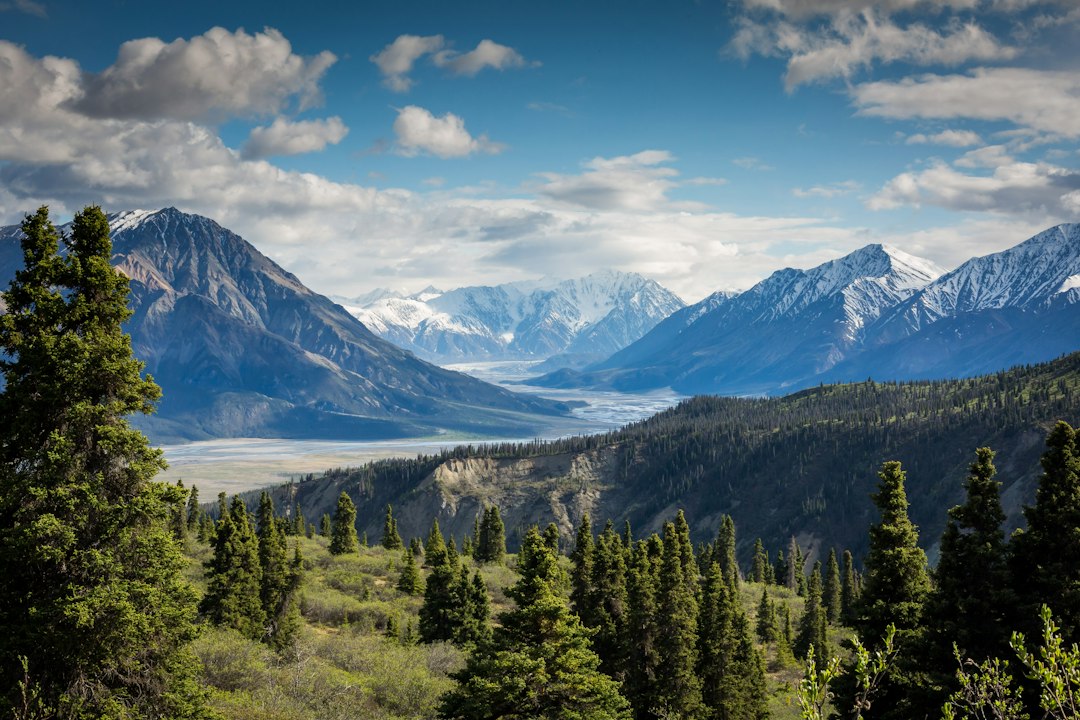
Daocheng Yading is the headline nature destination in southern Ganzi, and on a clear autumn day many locals rate it as visually more impressive than the Da Gongga range. The trade-off is access: the drive from Chengdu is roughly two days in each direction, and the small Daocheng Yading airport has weather-prone schedules that frequently cancel or delay flights. Build buffer days in and out, and treat any tight connection through Chengdu as risky.
The classic window is autumn, roughly late September to late October, though the exact peak shifts year to year with weather. Outside that window, the views can be obscured by cloud or snow. Acclimatization matters: the park entrance sits above 3,500 m, and the higher trails go higher.
3. Mt. Emei and Leshan
The Mt. Emei and Leshan pair is best understood as a cultural day or overnight, with nature as a bonus rather than the headline. Leshan’s Giant Buddha is a 70-meter Tang-dynasty cliff carving and is usually combined with Mt. Emei for a single overnight trip. Emei itself is a Buddhist mountain with temple stops and, on a clear morning, a famous cloud-sea sunrise at Golden Summit.

The Emei-Leshan area also has one of Sichuan’s stronger local-food scenes, which is a practical reason to spend a night there instead of rushing back to Chengdu. The high-speed rail connection from Chengdu to Emei makes this pair unusually efficient for a short-stay visitor.
4. Sanxingdui Museum
Sanxingdui is the Bronze Age archaeological site that put Sichuan on the global museum map, and the on-site museum is widely rated as one of the most striking in China. The signature artifacts are the large bronze masks and standing figures from a culture that, until the 1980s discoveries, was essentially unknown. The collection is visually unlike anything else in the country, which is why many visitors find it more memorable than larger, more familiar museums in Xi’an or Beijing.

Sanxingdui is a half-day side trip from Chengdu, well suited to a rest day between harder travel days. The museum has expanded into a new building in recent years; check the official site for current ticket booking, opening hours, and which building your ticket covers.
5. Mt. Siguniang and Bipeng Valley
Mt. Siguniang and Bipeng Valley are two sides of the same peak (Yaomei Peak). The south side is the Mt. Siguniang scenic area, with Shuangqiao and Changping valleys as the standard day-hike and shuttle-bus options. Bipeng Valley sits on the north side and has a similar alpine profile, with autumn color historically as its strongest selling point.
A note from a local: the Myaolo (Miyaluo) red-leaf area near Bipeng was once a top-tier autumn color destination, but its visual quality dropped sharply after a hydropower station was built nearby. Do not assume the classic red-leaf reputation still holds; check recent visitor photos before planning an autumn trip around it.
6. Aba Grasslands and Lianbao Ye Ze
The Aba Grasslands and Lianbao Ye Ze pair is a summer and autumn destination. The grasslands are at their most photogenic from roughly June to October, when wildflowers cover the slopes; Lianbao Ye Ze adds unusual limestone and lake scenery in the same region. The area sits at altitude, so acclimatization days are useful, especially if you are arriving from the Chengdu basin.
A practical add-on: Lianbao Ye Ze and Nianbao Ye Ze are two different sites. Nianbao Ye Ze is technically in Qinghai but sits right next to Lianbao Ye Ze, so crossing the provincial border can effectively give you a second site in the same trip. The area is also Tibetan, and the usual respect-for-religion-and-photography etiquette applies.
7. Dujiangyan and Mt. Qingcheng
Dujiangyan and Mt. Qingcheng are a Chengdu-adjacent pair with a long shared history. Dujiangyan is a 2,200-year-old water management system that still controls the Min River; Mt. Qingcheng is the Taoist mountain behind it. Together they form one of the most efficient half-day or full-day side trips from Chengdu, and the high-speed rail link from Chengdu to Qingchengshan station makes the day extremely easy.
This is the most “rounded” stop on the list: cultural, scenic, and logistical. For travelers with limited time in Chengdu, this is a higher-value use of a day than trying to tack on a longer overland transfer.
8. Da Gongga Mountain Loop (Hailuogou, Xinduqiao, Tagong, Zimei Liang, Bawang Hai)
The Da Gongga loop is the trip for travelers who have a full week and a capable vehicle. The loop combines the Hailuogou glacier area, the photographer-famous Xinduqiao grasslands, the Tagong monastery and plateau, the Zimei Liang viewpoint (often the best Da Gongga viewpoint on a clear day), and the Bawang Hai forest. A local recommendation is to allow seven days and a 4WD-style SUV, and to accept that even the toughest road section is worth it for the scenery.
This is the single most demanding item on the list. Do not attempt it in winter without checking road conditions, and treat any one-day version of this loop as a serious compromise.
9. Xichang (Qionghai and Luoji Mountain) with Lugu Lake
Xichang and Lugu Lake form the southern-lake slow-travel option. Qionghai is a large calm lake on the edge of Xichang city and is a low-effort way to spend a relaxing day; Luoji Mountain is a higher-altitude alternative with a cable car. Lugu Lake is a half-day’s drive further south, sits on the Sichuan-Yunnan border, and is most rewarding in winter for its quiet, sunny, off-season character.
A local travel note: the highway between Xichang and Lugu Lake has been under construction, and the current drive time can be longer than older guidebooks suggest. Verify the current road status before committing to a tight onward connection.
10. Northwestern Ganzi (Seda Buddhist Academy and Dege)
The northwestern Ganzi region is the most “otherworldly” stop on this list, and the one most often skipped by first-time visitors. Seda’s Buddhist Academy, with its thousands of small red monks’ houses covering a hillside, is visually unlike anywhere else in China. Dege’s printing house is a centuries-old Tibetan printing center. The trade-off is altitude: most of this region sits well above 3,500 m, and travelers prone to altitude sickness should plan acclimatization days and consider skipping it entirely.

Access to Seda and Dege can be subject to local permits or temporary restrictions; check current conditions before booking flights or self-driving in.
Common mistakes foreign travelers make in Sichuan
The most common mistakes are not unique to Sichuan, but they are amplified by the province’s scale and altitude spread.
- Trying to cover all ten in one trip. Even with two weeks, the distances and altitudes make this impractical. Pick one zone, or two adjacent zones.
- Underestimating altitude. Daocheng Yading, Seda, Da Gongga, and northwestern Ganzi all sit at or above 3,500 m. Plan acclimatization days, hydrate, and avoid ascending too fast from the Chengdu basin.
- Assuming Google Maps works everywhere. Apple Maps and Google Maps can be unreliable on Sichuan mountain roads. Amap (Gaode) or Baidu Maps are more dependable.
- Trusting fixed price or schedule claims. Ticket prices, shuttle bus fees, opening hours, and road conditions can all change. Verify close to travel through the official sites listed in the references.
- Showing up at UNESCO sites without a real-name booking. Jiuzhaigou, Huanglong, Emei, Leshan, Qingcheng, and Dujiangyan all require real-name advance booking in peak periods. Walk-up tickets are not guaranteed.
Practical knowledge for a Sichuan trip
A few pieces of related knowledge tend to come up again and again on a Sichuan trip.
- Hub. Chengdu (Tianfu and Shuangliu airports) is the natural base. High-speed rail connects Chengdu to Emei, Leshan, Dujiangyan, and Xichang.
- Payments. Foreign cards and cash are not universally accepted outside Chengdu. Alipay or WeChat Pay, with an international card linked, is the practical default across the province.
- Transport to remote sites. For Ganzi destinations, Kangding, Garze, and Daocheng airports open the door to high-plateau sites, but the small airports are weather-prone. Self-driving with a capable vehicle is the most flexible option for Da Gongga, Siguniang, Yading, and northwestern Ganzi, but requires altitude awareness.
- Tickets. Real-name advance booking is required for Jiuzhaigou, Huanglong, Emei, and other flagship sites in peak autumn.
- Weather and clothing. Plateau regions can swing 15 to 20 degrees Celsius in a single day. Layered clothing is essential even in summer.
- Etiquette. Buddhist sites (Seda, Emei) require modest dress and quiet behavior. On the Aba Grasslands and in Tibetan areas, ask before photographing people, religious sites, or livestock.
Summary
Sichuan is too large and too varied to fit into a single trip, and the most useful question is not “what are the top ten places” but “which zone fits my time, fitness, and season.” The Chengdu cultural belt is the easiest entry point. The Ganzi nature circuit is the high-payoff road trip for travelers with a week or more. The southern lake country is the slow, off-season alternative. A foreign visitor who picks one zone and plans around the season is far more likely to come back satisfied than a traveler who tries to stitch all ten into one rushed itinerary.
Final words
More reading and next steps
That is the main thread of the article. Keep the links below handy, and use the related posts to continue exploring the same topic from a different angle.
References and links
- Jiuzhaigou Valley UNESCO listing Confirms Jiuzhaigou's World Heritage status and protected-area framework used to plan a visit.
- Mount Emei and Leshan Giant Buddha UNESCO listing Background on the cultural framing of the Emei-Leshan day trip and its combined-ticket setup.
- Mount Qingcheng and Dujiangyan Irrigation System UNESCO listing Explains why the Chengdu-adjacent Qingcheng-Dujiangyan pair is a recognized heritage stop.
- Sanxingdui Museum official site Authoritative source for opening status, ticket booking, and current exhibit building for Sanxingdui.
- Sichuan Provincial Department of Culture and Tourism Seasonal advisories, road notices, and policy updates for travel across the province.
- China Railway 12306 Official source for high-speed and conventional train schedules used to reach Chengdu, Emei, and Xichang.
Comments