Best Time to Visit Sichuan, China: Seasonal Guide to Mountains, Lakes, and Grasslands
Sichuan does not have a single “best time to visit” that fits every nature destination, and a foreign traveler who plans the whole trip around one season usually ends up visiting the wrong places at the wrong time. The honest answer is regional: Daocheng Yading is at its most striking in autumn on a clear day; the Aba Grasslands and Lianbao Ye Ze are best in summer and autumn when wildflowers cover the slopes; Xichang and Lugu Lake are quiet, sunny, and relaxing in winter; the Da Gongga loop is a multi-day trip that works across the warmer months but demands winter driving skill. Jiuzhaigou, Huanglong, the Siguniang-Bipeng area, and Mt. Emei are workable across most of the year, with autumn the classic all-rounder for a first visit.

Why season matters more in Sichuan than in most Chinese provinces
Sichuan covers an unusually wide climate spread. The Chengdu basin is subtropical and humid, the Ganzi prefecture is high-altitude plateau, and the southern lake country is a milder mid-elevation belt. A single calendar month can be peak wildflower time in the Aba grasslands, peak autumn color in Yading, and peak quiet-season calm in Lugu Lake at the same time.
This is why the common foreign-tourist mistake is to plan a “best month” trip and assume it covers everything. Treating Sichuan as one climate leads to arriving in Yading during monsoon cloud cover, or to Lugu Lake in the middle of summer rain, or to the Aba grasslands in winter when the slopes are dry and brown. The local framing in this guide pairs each major destination with its own season, so the reader can match a window to a place rather than the other way around.
How to pick: three seasonal trip styles
A practical way to use the regional breakdown below is to pick one of three seasonal trip styles, then match it to the time you have.
- Autumn flagship loop (late September to late October). Daocheng Yading plus Jiuzhaigou and Huanglong. This is the classic “all-rounder” first-visit Sichuan trip and the only season that satisfies both the Yading and Jiuzhaigou-Huanglong color windows.
- Summer grassland loop (June to October). Aba Grasslands, Lianbao Ye Ze, and (optionally) the eastern edge of the Ganzi plateau. Best for travelers who want wildflowers, open green space, and a slower high-plateau pace.
- Winter southern-lake trip (December to February). Xichang and Lugu Lake. Best for travelers who want sunny, off-season, slow travel and do not mind cool (not extreme) mountain-winter temperatures.
A multi-week traveler can combine two adjacent styles, but combining all three in a single trip is usually too rushed to be rewarding.
Seasonal breakdown by region
Daocheng Yading: autumn, on a clear day
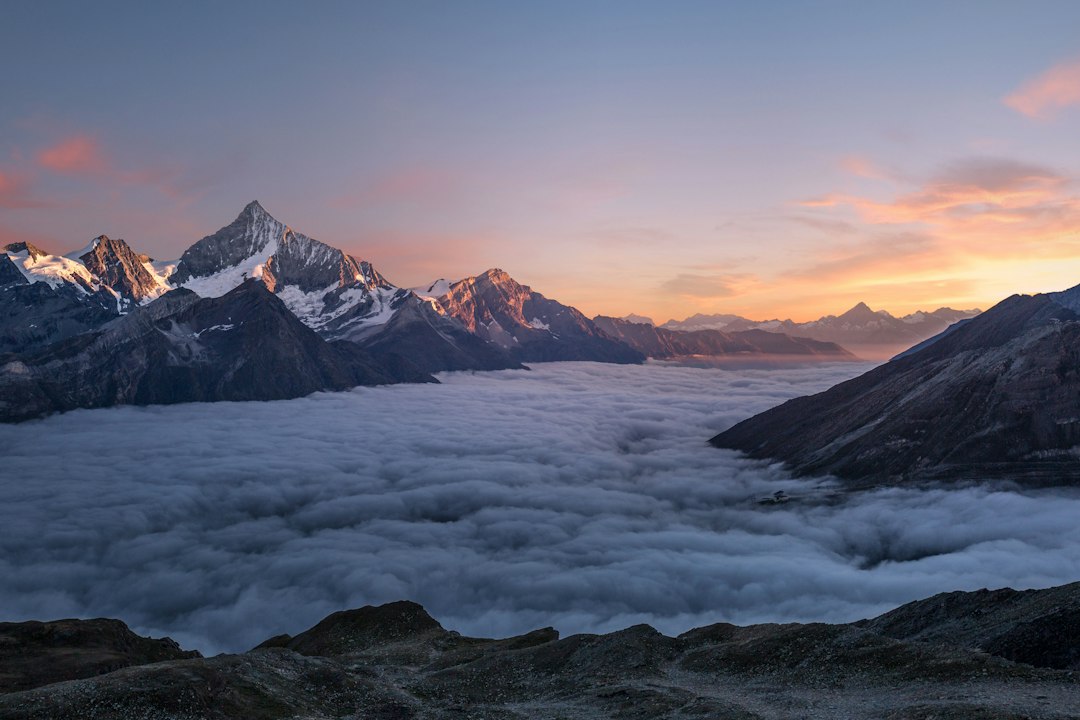
The local framing for Yading is “best viewing time is autumn, on a clear day.” The phrase matters: the autumn color window is roughly late September to late October, but the actual scenery depends almost entirely on whether the peak is in clear weather. Cloud, snow, or haze can hide the snow mountains entirely. Many visitors arrive in the right calendar window and still see a flat, gray valley.

Access is the other constraint. The drive from Chengdu is about two days in each direction, and the Daocheng Yading airport has weather-prone schedules that frequently cancel or delay flights. Build buffer days into both ends of the trip, and avoid tight connections through Chengdu.
Aba Grasslands and Lianbao Ye Ze: summer to autumn
The Aba Grasslands and Lianbao Ye Ze are paired destinations in northern Sichuan that are best in summer to autumn, roughly June to October. The peak wildflower window shifts year to year, so do not anchor the trip to a specific date; check the current year’s reports or recent visitor photos.
Lianbao Ye Ze is sometimes confused with Nianbao Ye Ze. They are two different sites. Nianbao Ye Ze is technically in Qinghai but sits right next to Lianbao Ye Ze, so the two can be combined across the provincial border. The area is at altitude (most of it sits above 3,500 m), so plan acclimatization days, especially if arriving from the Chengdu basin.
Xichang (Qionghai) and Lugu Lake: winter
Xichang and Lugu Lake are the southern-lake option and work best in winter, roughly December to February. The weather is sunny, the lake towns are quiet, and the pace is slow. A local travel note from the pandemic intermission in early winter 2021: the writer personally drove from Xichang to Lugu Lake specifically for the sun-and-quiet winter experience, and described the lakeside as excellent for sunbathing and relaxing.
Two soft caveats. First, the highway between Xichang and Lugu Lake has been under construction for an extended period, and the current drive time is longer than older guidebooks suggest. Verify the road status before committing to a tight schedule. Second, winter Lugu Lake is quiet in normal years, but shoulder weeks around Chinese New Year can see local traffic spikes; treat the “quieter winter” claim as approximate rather than guaranteed.
Da Gongga Mountain Loop: warmer months, multi-day
The Da Gongga loop (Hailuogou, Xinduqiao, Tagong, Zimei Liang, Bawang Hai) is a multi-day road trip that works across the warmer months but should be treated as a summer-and-autumn trip in normal years. The local recommendation is to allow a full week and a 4WD-style SUV, because even the toughest road section is considered worth it for the scenery.
Winter driving on the loop is a different question. The high-altitude passes can close due to snow, and the road surfaces can require chains. Unless you have specific winter driving experience in the area, plan the Da Gongga loop outside the snow season.
Mt. Siguniang and Bipeng Valley: autumn, with caveats
Mt. Siguniang and Bipeng Valley are two sides of the same peak (Yaomei Peak). Autumn has historically been their strongest season, with Myaolo (Miyaluo), near Bipeng, once a top-tier red-leaf destination. A local caveat: Myaolo’s visual quality dropped sharply after a hydropower station was built in the area, so do not assume the classic red-leaf reputation still holds. Check recent visitor photos before planning an autumn trip around it.
The south-side Siguniang valleys (Shuangqiao and Changping) are workable across most of the year and are a good option when the autumn color window is missed.
Jiuzhaigou and Huanglong: autumn is the classic, with shoulder options
Jiuzhaigou and Huanglong are the headline water-and-color sites in northern Sichuan. The strongest single season is autumn, when the lakes take on their most saturated blue, green, and turquoise colors. Outside autumn, the park is still worth visiting, but the visual peak is lower. Real-name advance booking is required in peak autumn, and the park enforces a daily visitor cap that can fill weeks ahead for October dates.
Mt. Emei: workable year-round, with seasonal trade-offs
Mt. Emei is one of the more season-flexible destinations on this list. Spring and autumn are the most comfortable, summer can be rainy, and winter offers a clear sunrise cloud-sea at Golden Summit for travelers who do not mind the cold. Most foreign visitors combine Mt. Emei with the Leshan Giant Buddha as an overnight from Chengdu.
Practical knowledge for a seasonal Sichuan trip
A few related-knowledge items come up across most seasonal Sichuan trips.
- Transport and airports. Chengdu is the natural hub (Tianfu and Shuangliu airports). For Ganzi destinations, Kangding, Garze, and Daocheng have small airports with weather-prone schedules. Build buffer days around flights into and out of these airports.
- Mountain roads. Winter road conditions on the Yading route, the Da Gongga loop, and the Xichang-Lugu Lake road can require chains or 4WD. Check Amap (Gaode) or Baidu Maps for live conditions, since Apple Maps and Google Maps can be unreliable on Sichuan mountain roads.
- Altitude. Yading, Seda, Aba Grassland, and Da Gongga all sit at or above 3,500 m. Plan gradual ascent and acclimatization days, hydrate, and avoid alcohol on the first day at altitude.
- Tickets. Real-name advance booking is required for Jiuzhaigou, Huanglong, Emei, and other flagship sites, especially in peak autumn.
- Payment. Even in remote grassland and lake areas, Alipay or WeChat Pay with a linked international card is more reliable than foreign cards or cash.
- Weather and clothing. Plateau weather can swing 15 to 20 degrees Celsius in a single day; layered clothing is essential even in summer.
- Etiquette. On the Aba Grasslands and in Tibetan areas, ask before photographing people, religious sites, or livestock.
Common mistakes when planning a Sichuan seasonal trip
The seasonal-specific mistakes are the ones most worth flagging.
- Treating Sichuan as one climate. The basin, the plateau, and the southern lake country are three different worlds in terms of temperature, rain, and crowd levels.
- Underestimating plateau weather swings. A 15 to 20 degree Celsius swing in a single day is normal on the Ganzi plateau. Pack layers, not just a single-season jacket.
- Trusting “best month” claims without checking the destination. A “best month” of October is correct for Yading and Jiuzhaigou, wrong for the Aba grasslands, and unrelated to Lugu Lake.
- Ignoring Yading’s autumn weather window. Yading’s scenery depends on a clear day inside the autumn window. Build buffer days and have a fallback plan if the peak is in cloud.
- Trying to combine all three seasonal trip styles in one rushed visit. Pick one zone or two adjacent ones, and plan around the season that suits them.
Summary
The “best time to visit Sichuan” question only has a useful answer when it is broken down by region. Autumn (late September to late October) is the strongest all-rounder for a first visit, especially for the Yading plus Jiuzhaigou-Huanglong combination. Summer to autumn (June to October) is the window for the Aba Grasslands and Lianbao Ye Ze. Winter (December to February) is the quiet, sunny, slow-travel window for Xichang and Lugu Lake. The Da Gongga loop and the broader Ganzi prefecture work best in the warmer months and require a multi-day commitment. A foreign traveler who matches the season to the region, and who plans around altitude and weather variability, will get more out of a Sichuan trip than a traveler who plans around a single “best month.”
Final words
More reading and next steps
That is the main thread of the article. Keep the links below handy, and use the related posts to continue exploring the same topic from a different angle.
References and links
- Jiuzhaigou National Park official site Closure, weather, and shoulder-season advisories for Jiuzhaigou that affect the practical visit window.
- Daocheng Yading official scenic area Seasonal opening hours and access updates for the Yading area, the headline autumn destination in southern Ganzi.
- Sichuan Provincial Department of Culture and Tourism Seasonal advisories and policy updates that affect travel across the province.
- China Meteorological Administration public forecasts Regional climate and weather forecasts used to check plateau and high-mountain conditions before a trip.
- China Railway 12306 Official seasonal train schedules for reaching Chengdu, Xichang, and other gateway cities.
- Amap (Gaode) Maps Live road and weather conditions on mountain routes where Apple Maps and Google Maps are unreliable.
Comments