Why Chinese Residential Neighborhoods Have Everything You Need Within a 5-Minute Walk
If you stay in a Chinese residential neighborhood instead of a tourist hotel, here is what happens. You walk out the front gate at 7 AM and find a jianbing vendor cracking eggs with one hand while directing QR-code payments, a soy-milk seller bagging drinks, a steaming baozi shop with a line of office workers, a fruit vendor arranging dragonfruit, and a key-maker who has been sitting in the same spot since 1998. You came down to buy bottled water. You return with water, a warm sesame flatbread, and the quiet realization that this is not a commercial district—people live here.
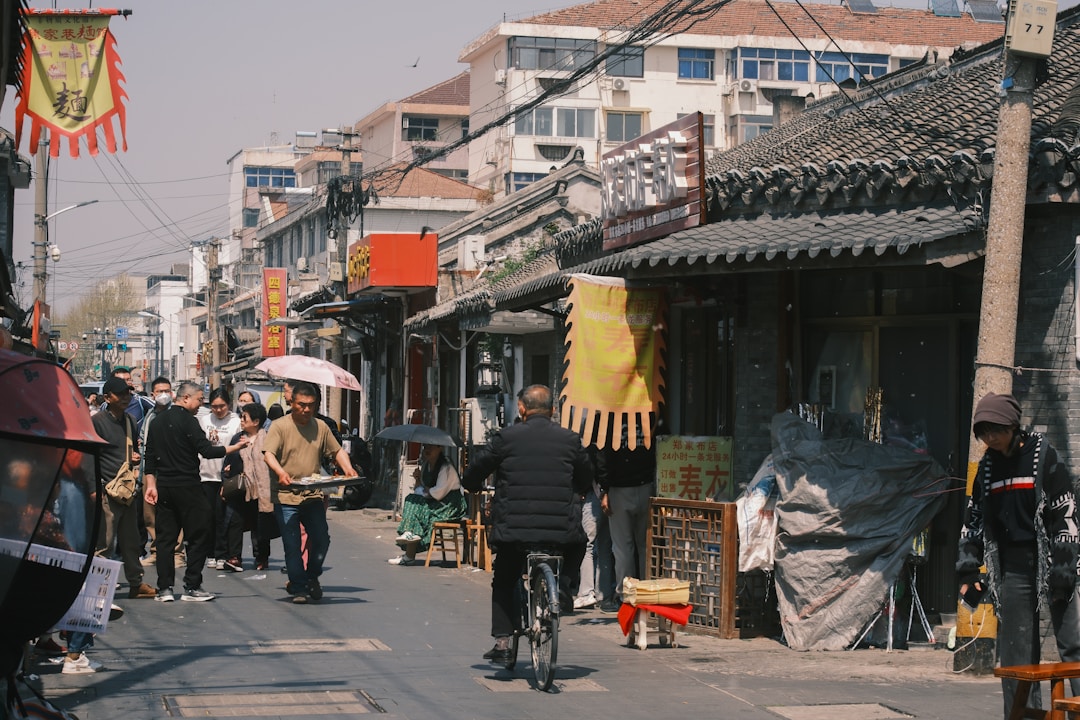
What You Find Within a Short Stroll
A typical Chinese residential neighborhood puts an astonishing variety of services within roughly a five-minute walk. This is not curated or planned by any single developer—it is an organic ecosystem that accumulates as residents move in.
Within that radius you can typically find: a breakfast stall, a pharmacy, at least one supermarket, a phone repair shop, a barber, a milk-tea shop, a courier station, a pet store, a print shop, a dentist, a BBQ joint, a real estate agent, a massage parlor, a fruit vendor, a key-maker, and an old man who sits in the same chair every day watching the world go by.
You go downstairs to buy soy sauce, and on the way you can get a haircut, pick up a package, eat a bowl of noodles, replace your phone screen protector, and listen to two old men argue over a chess game. This is not efficiency—it is density doing what density does best.
Why This Surprises Foreign Visitors
A traveler from a car-dependent suburb stands outside a Chinese residential gate, watching this scene, and asks: “Is this a commercial area?”
The answer is no. This is purely residential. What surprises them is not any individual shop—it is the idea that residential life can be this dense, this walkable, this alive without being a downtown commercial zone.
In many Western suburbs, residential means houses, lawns, garages, and silence. A trip to buy milk means getting in a car. Chinese residential zones are the opposite: they are the most convenient places in the city precisely because people live there. Everything follows the people. The breakfast stall exists because 2,000 people walk past it every morning. The key-maker exists because people lose keys. The pet store exists because people have pets. It is not complicated—it just requires enough people in one place for all of these micro-businesses to stay afloat.
How It Actually Works
The structural reason is simple: ground-floor retail in residential towers is the norm, not the exception. Chinese urban planning allows—and in practice encourages—commercial use on the ground level of residential buildings. A 30-story apartment tower might have a convenience store, a noodle shop, and a pharmacy occupying its street-facing ground floor, with hundreds of families living above.

Three factors make this work:
Population density. A single residential complex can house several thousand people. That is enough customers to support dozens of small businesses that would starve in a low-density suburb.
Low barriers to entry. Setting up a small food stall, a fruit stand, or a key-making booth does not require extensive permits, commercial leases, or business plans. Vendors can start small and grow organically.
Self-organizing ecosystems. No central planner decides that this block needs a pharmacy and that block needs a noodle shop. Vendors set up where demand exists. Over time, each neighborhood develops its own commercial personality—this street has three breakfast options and a legendary BBQ joint; that street has two competing phone repair shops and a tailor everyone recommends.
What a Real Morning Walk Looks Like
Here is a real errand, the kind that happens a thousand times a day in any Chinese residential area:
You step out at 7:30 AM. First stop: the jianbing cart 30 meters from the gate. You order, pay by scanning a QR code with your phone, and eat standing up like everyone else. Then you remember you need ibuprofen, so you walk 50 meters to the pharmacy. On the way back, you pass the courier station and decide to pick up yesterday’s delivery. You notice the fruit vendor has good-looking mangoes and buy one. Total elapsed time: maybe 15 minutes. Total distance traveled: under 400 meters.
You did not plan any of this. You did not get in a car. You just walked downstairs and let the neighborhood provide.

Compare this with a typical suburban morning: drive to the pharmacy, drive to the grocery store, drive to the post office. Each errand is a separate trip. Each trip requires a car. Nothing is connected to anything else.
Not Every Neighborhood Is the Same
A few honest caveats. The degree of walkable convenience varies significantly by city tier and neighborhood age. Older neighborhoods in central Beijing, Shanghai, or Guangzhou tend to have the richest street-level ecosystems—decades of organic commercial growth layered onto dense residential fabric. Brand-new developments on city edges, especially luxury gated communities, may have sparser commercial offerings. Some are designed with underground parking and wide roads that discourage street-level wandering.
Tier-3 and tier-4 cities often have their own version of neighborhood convenience, but the vendor mix shifts. You might see more fresh-produce markets and fewer milk-tea chains. The density is still there—it just looks different.
Common Mistakes Visitors Make
Assuming every Chinese area is equally convenient. If you book an Airbnb in a newly built district on the outskirts of a megacity, you may find yourself walking 15 minutes to the nearest supermarket. Check the neighborhood before booking.
Expecting Western-style zoning separation. If you want a quiet, shop-free residential street, you are in the wrong country. Chinese residential areas are lively by design, and that liveliness includes noise—morning vendors, evening BBQ smoke, and the constant hum of scooters. This is not a bug; it is how the neighborhood breathes.
Not carrying a phone. Almost every street vendor, no matter how small, displays a QR code for payment. Cash is increasingly rare. If your phone dies, you effectively lose access to half the neighborhood economy. More on mobile payment in our guide for foreign visitors.
Summary
Chinese residential neighborhoods are not tourist attractions. They are the default texture of daily life for hundreds of millions of people. What foreign visitors discover is not an exotic cultural experience—it is simply what happens when you let density, walkability, and low-barrier commerce grow together organically.
You do not need an itinerary to experience this. Just book a place in a real residential area, walk out the door in the morning, and let the neighborhood show you how it works.
Final words
More reading and next steps
That is the main thread of the article. Keep the links below handy, and use the related posts to continue exploring the same topic from a different angle.
Comments