How to Book China High-Speed Train Tickets as a Foreigner — A Complete Step-by-Step Guide
Can Foreigners Book China High-Speed Train Tickets Online?
Yes, foreigners can book China high-speed train tickets online. The easiest method is using an English-friendly third-party agency like Trip.com or TravelChinaGuide rather than the official 12306 website, which is Chinese-only and requires manual in-person passport verification for foreign registration. You need your passport number to book. Seats on popular routes like Beijing-Shanghai sell out quickly during Chinese holidays, so book 2-4 weeks in advance during peak seasons.

Why Booking Train Tickets Is Tricky for Foreigners
China operates over 50,000 kilometers of high-speed rail with more than 9,300 daily bullet trains connecting over 500 cities. It is one of the most extensive rail networks in the world, and for many routes, the train is faster than flying when you account for airport travel and security wait times.
The problem is that the official booking system, 12306.cn, was designed for Chinese citizens. It has no English interface, and foreign passport registration requires a visit to a staffed station counter for identity verification before you can book online. Third-party agencies solve this by providing an English interface, accepting international credit cards, and handling the ticket issuance on your behalf.

Step-by-Step: How to Book Your Train Ticket
1. Choose a Booking Agency
Stick with a reputable English-friendly platform. Trip.com is the most widely used by foreign travelers. TravelChinaGuide also offers a dedicated train booking service for international users. Both accept Visa and Mastercard directly.
2. Search Your Route
Enter your departure city and destination city in English. Be precise — Beijing has multiple stations (Beijing South, Beijing West, Beijing Chaoyang, Beijing Fengtai). Select the correct station for your destination. The system will show available trains with travel time, class options, and price.
3. Understand Train Types and Seat Classes
China’s high-speed trains use letter prefixes:
- G-series: High-speed, 300-350 km/h. The most common choice for long-distance travel.
- D-series: Slower high-speed, 200-250 km/h. Often cheaper but takes longer.
- C-series: Intercity commuter trains, usually between nearby cities.
Seat classes on G and D trains:
- Second class: 5 seats across (3+2). Affordable and comfortable. The standard choice.
- First class: 4 seats across (2+2). Wider seats, more legroom, often includes a small snack.
- Business class: 2+1 or 1+1 layout. Fully reclining seats on most newer trains. The premium option.
For overnight routes, sleeper trains offer soft sleepers (4-berth compartments with doors) and hard sleepers (open 6-berth compartments).
4. Enter Your Passport Information
You will need your passport number exactly as it appears on the document. The name must match your passport. Double-check before submitting — an incorrect name can prevent you from boarding.
5. Pay with an International Credit Card
Visa and Mastercard work reliably on third-party booking sites. The ticket is issued in your name and tied to your passport number.
6. Receive Confirmation and Collect Your Ticket
Most agencies send an e-ticket confirmation. In most cases you can show your phone at the station, but it is safer to collect paper tickets — some smaller stations still require them. Collect paper tickets at any railway station ticket counter or at a self-service machine with a passport reader. Bring your original passport.

7. At the Station
Arrive at least 60 minutes before departure for a high-speed train. The process is:
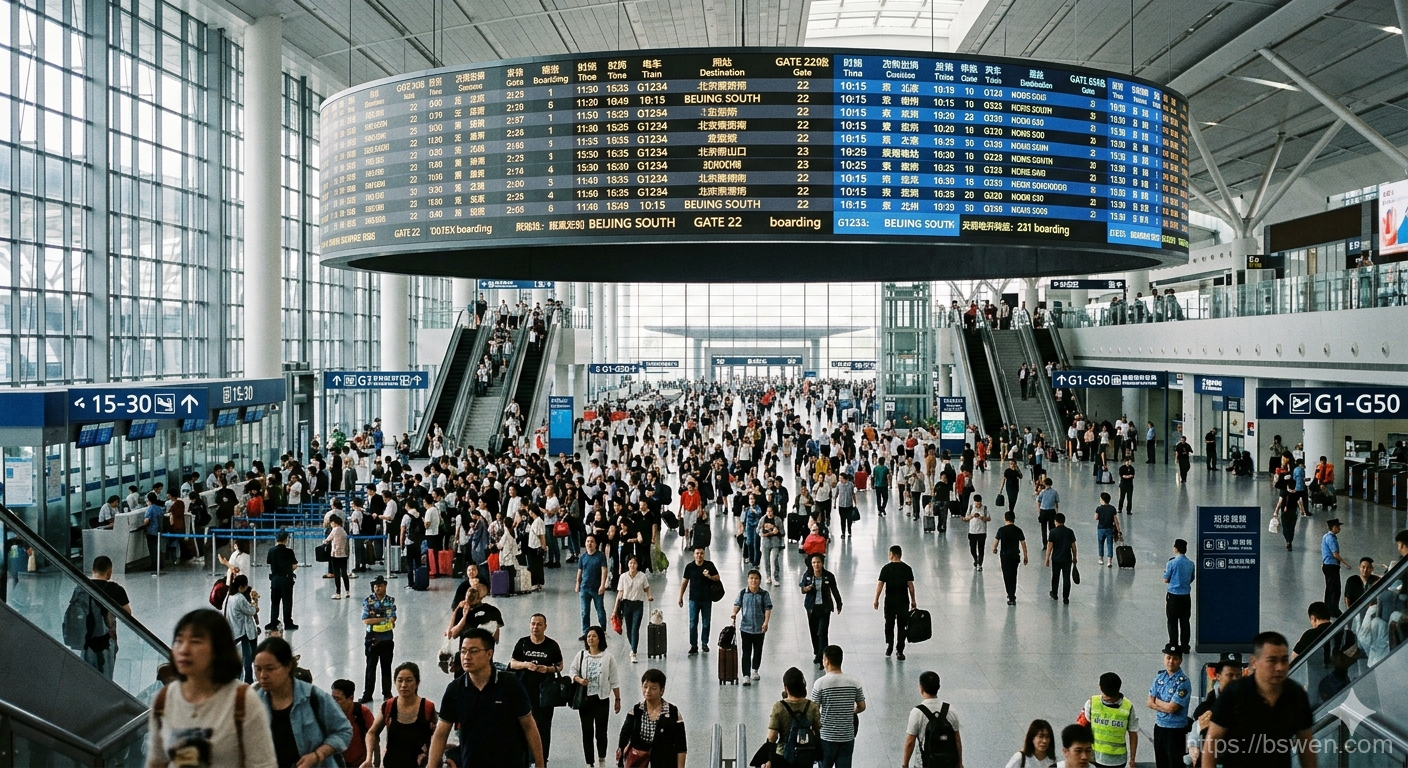
- Security check at the station entrance (all bags go through an X-ray machine).
- Find your waiting hall — check your ticket or the big departure board.
- Gate opens about 15 minutes before departure.
- Find your carriage and seat — carriage number is on your ticket and on the platform floor markers.
- Store your luggage on the overhead rack (limit about 20 kg per adult, total item length within 130 cm).
When to Book: Timing Guide
| Season | Recommendation |
|---|---|
| Chinese holidays (Spring Festival, National Day, May Day) | Book 3-4 weeks ahead |
| Summer travel season (July-August) | Book 2-3 weeks ahead |
| Normal season | Book 1-2 weeks ahead |
| Less popular routes | Same-day booking is sometimes possible |
Chinese National Day holiday (October 1-7) and Spring Festival (dates vary, usually January-February) are the busiest travel periods. Trains sell out completely, especially on the Beijing-Shanghai, Shanghai-Hangzhou, and Guangzhou-Shenzhen corridors.
Common Mistakes to Avoid
Going to the wrong station. Beijing has four major railway stations. Beijing South serves high-speed trains to Shanghai and Tianjin. Beijing West serves trains to Xi’an, Chengdu, and Guangzhou. Check the exact station name on your ticket before heading out. The stations are kilometers apart.
Not allowing enough time for security. Stations are large and security lines can be long, especially during holidays. Budget a full hour from station entrance to platform.
Mistaking a sleeper for a seat. On overnight routes, check whether you booked a seat or a sleeper. A second-class seat on an overnight train is not comfortable for sleeping. If you want to sleep, book a soft sleeper or hard sleeper berth.

What to Know Once You Are on the Train
- Food: Snacks, instant noodles, boxed meals, and drinks are sold from trolley carts that pass through the aisles. First-class and business-class passengers may receive a complimentary snack box.
- Toilets: Second-class carriages typically have squat toilets. First-class and business-class carriages have Western-style toilets. Toilet paper is not always provided — carry your own.
- Stops: The train attendant announces each stop in Mandarin and English on most G-series trains. Listen for your station name.
- If you miss your train: Go to the station’s ticket counter. You can usually rebook for the same route on the same day for a fee, depending on availability.
Summary
Book through an English-friendly agency using your passport. Choose the right train type and seat class. Double-check your departure station. Arrive at least 60 minutes early. Carry your passport at all times — you need it to collect tickets, board, and show to attendants during the journey. China’s high-speed rail network is comfortable, extensive, and the best way to travel between cities, but the booking process rewards preparation.
Final words
More reading and next steps
That is the main thread of the article. Keep the links below handy, and use the related posts to continue exploring the same topic from a different angle.
References and links
- TravelChinaGuide China Trains Section Comprehensive train schedule, pricing, station listings, and luggage rules. Updated with 2026 news including Beijing-Shanghai second-class ceiling price adjustment.
- TravelChinaGuide How to Take a Train in China Step-by-step guide to the station process including security check, waiting hall, boarding, and finding your seat.
- Trip.com Train Booking English-friendly booking platform widely used by foreign travelers for China train tickets with international card support.
Comments