Best Places to Visit in Fuzhou: A Guide for First-Time Travelers
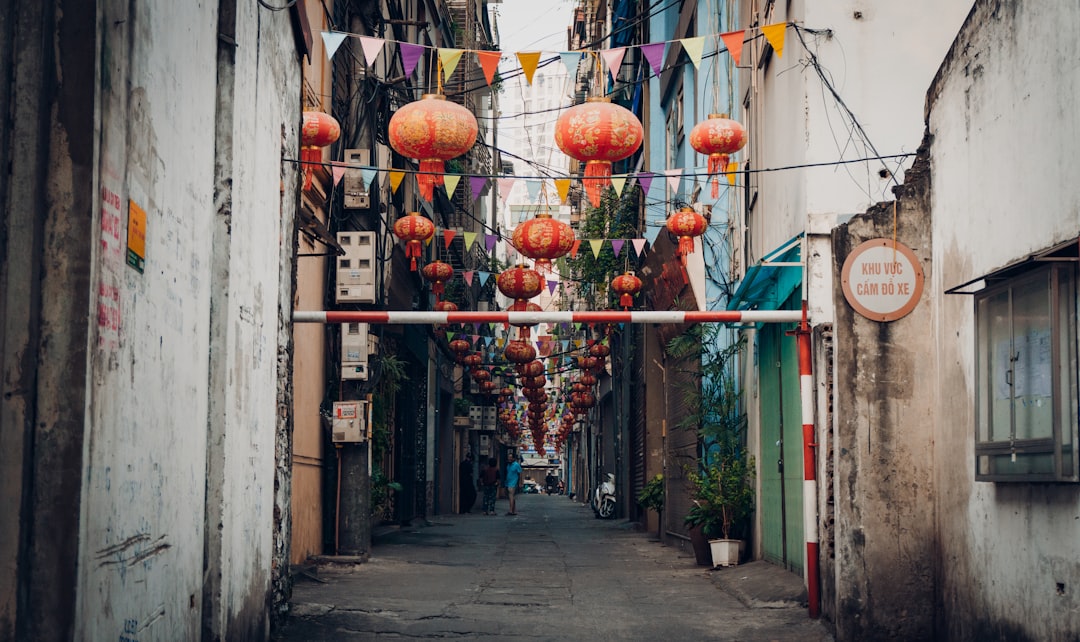
Fuzhou’s top attractions center on historic neighborhoods, classical gardens, and scenic viewpoints. The essential list: Three Lanes Seven Alleys (5A-rated historic district), Fuzhou West Lake (free classical garden), Yantai Mountain (historic foreign consulate area), Drum Mountain (sunset viewpoint), and Fudao (award-winning forest walkway). Most attractions are free or low-cost, and they cluster along Metro Line 1 for easy access.
Three Lanes Seven Alleys

Three Lanes Seven Alleys is Fuzhou’s only 5A-rated attraction. The district originated in the Jin dynasty and matured through Tang, Five Dynasties, Ming, and Qing periods. It holds a “living fossil of the Li-Fang system” status and preserves Ming-Qing architecture across a grid of lanes.
The layout follows a distinctive shape. Nanhou Street runs north-south, with “Three Lanes” on the east side and “Seven Alleys” on the west. Walking through feels like stepping into a preserved urban scale from centuries past.
Notable residents include Yan Fu, Yu Dafu, Lin Shu, Shen Baozhen, and Zheng Xiaoxu. The concentration of historical figures in one neighborhood is unusual for a Chinese city of this size.
Tips: The street itself is free. Some celebrity residences charge entry. Focus on the history and architecture, not just the souvenir shops and photo spots along the main pedestrian path. If you have time, visit adjacent Lin Zexu Memorial and Fuzhou Museum to connect the heritage with Maritime Silk Road context.
Fuzhou West Lake

Fuzhou West Lake ranks sixth among China’s 36 West Lakes, behind Hangzhou and Yangzhou. It sits in the city center as a free public park and preserves the best classical garden layout in Fuzhou.
A typical walk covers roughly 3000 meters: start from the wooden walkway, circle through the northern island, pass the dragon boat house, and finish at Fujian Museum. The full route takes about 40 minutes at a relaxed pace.
The lake area connects to Fujian Museum, which holds a Maritime Silk Road exhibition. This gives background context for other historic sites in the city.
Yantai Mountain
Yantai Mountain rises only 41.6 meters, making it an easy climb. The area splits into Old Yantai Mountain (historic foreign consulate zone) and New Yantai Mountain (commercial development).
The old section contains dozens of former consular buildings, each with stories from the late Qing and early Republican era. Ye Shengtao wrote in 1923 that “a garden, a road, a cluster of flowers, a house, a car driver - all have poetry” about this district.
From the park viewpoint, you can see Minjiang River and parts of the modern city skyline. The contrast between colonial architecture and contemporary towers is visible in one glance.
Fudao: Forest Walkway
Fudao is an elevated walkway winding through Houxian Mountain and Jinniu Mountain. The design lets you walk at forest level without climbing steep trails. It won the 2017 International Architecture Award.
The full route takes 4 to 5 hours. Recommended access: enter at Station 3, exit at Station 5 for a moderate segment. Avoid midday in summer when the walkway lacks shade. Bring insect repellent and check plant education markers along the trail.
The experience feels like walking through a forest canopy, not hiking a mountain. This suits visitors who want outdoor activity without intense effort.
Hualin Temple
Hualin Temple is a low-profile national treasure. Architecture enthusiasts sometimes fly to Fuzhou specifically to see it. The structure is Southern China’s most important wooden building, built without iron nails using pure mortise-and-tenon joints.
Entry costs only 2 yuan. The contrast with crowded modern temples is stark: this millennium-old building receives few visitors despite its heritage status.
If you care about Chinese architectural history, include this stop. If your interest is general sightseeing, you might skip it unless you have extra time.
Drum Mountain
Drum Mountain offers a sunset viewpoint with a full view of Fuzhou city. The main temple, Yongquan Temple, sits at mid-mountain with a design philosophy of “enter mountain, no temple; enter temple, no mountain.”
The path to the temple features cliff inscriptions from historical figures including Zhu Xi and Guo Moruo. These calligraphy works are visible along the walking route.
Check sunset time before visiting. The view is best in the hour before dusk. If you arrive too early, the city lights are not yet visible.
Metro-Based Itinerary Suggestions
Most attractions sit along Metro Line 1. Key stations:
- Pingshan Station: Hualin Temple, Yeshan Spring-Autumn Park
- Dongjiekou Station: Three Lanes Seven Alleys, Lin Zexu Memorial
- Nanmendou Station: Wuta, Baita, Confucian Temple, Yushan Park
- Dadao Station: Shanghang Xiahang
- Shangteng Station: Yantai Mountain
Line 4 connects West Lake and Fujian Museum at Ximen Station. Line 2 reaches Drum Mountain. Plan your days by metro line rather than by geography.
Common Mistakes
- Skipping museum context: Fuzhou Museum explains Maritime Silk Road history. Without this background, Three Lanes Seven Alleys and Lin Zexu Memorial feel like isolated architecture.
- Rushing Three Lanes Seven Alleys: Many visitors walk the main street, buy snacks, and leave. The celebrity residences and lane details hold more substance than the commercial surface.
- Missing Fudao’s entry points: The full walkway is long. Choose Station 3 entry and Station 5 exit unless you want the complete route.
- Ignoring sunset timing at Drum Mountain: Arrive too early and the city view is flat. Arrive too late and the trail closes before you reach the viewpoint.
Nearby Destinations
From Fuzhou, high-speed rail connects to:
- Pingtan Island: Famous for “blue tears” phenomenon in March-April
- Wuyi Mountain: UNESCO heritage site
- Quanzhou: Maritime Silk Road history
- Xiamen: Coastal city with Gulangyu Island
Use Fuzhou as a hub if you plan a longer Fujian circuit.
Final words
More reading and next steps
That is the main thread of the article. Keep the links below handy, and use the related posts to continue exploring the same topic from a different angle.
Comments